Afropean: what's in a name?
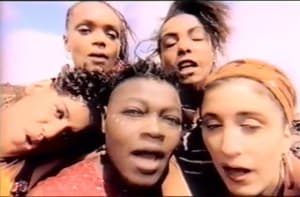
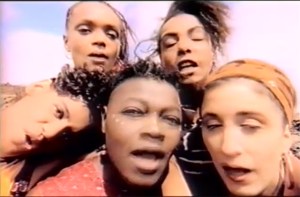
[caption id="attachment_451" align="alignnone" width="416"] ZAP MAMA performing “Brrrlak” - From the album Adventures in AFROPEA 1 © 1992[/caption] The term Afropean (or Afro-European) has circulated in activist and intellectual spaces for a while now. It seems to offer a new framework to talk and think of Black identity in European contexts. But although it captures a shared experience of Blackness in European contexts, it may also flatten local differences. It can erase specific identities and even reinforce Eurocentric frameworks of thought. In my circles, the term is embraced and contested, depending on context. To better understand its potential, I explore its affordances, and limitations, drawing on cultural debates, activist practices, and diasporic thought. The first use of Afropean appeared in the 1990s, when the Belgo-Congolese singer Marie Daulne of Zap Mama referred to herself as such in interviews with US-American media. At the time, it seemed to gesture more toward transatlantic recognition (i.e. an effort to align with African American categories of identity) than to an internally coherent European discourse. To signal that in Europe, too, there are Black people. However, in the United States, “Europe” is often imagined as a singular, homogeneous entity, just as they claim “America” as a national identity. Europeans themselves tend to identify nationally: Dutch, Belgian, German, Italian. Against that backdrop, calling oneself European, let alone Afro-European, can feel artificial, imposed, or even undesirable. Indeed, for many Black people in Europe, “European” is not a neutral or inclusive category. It often evokes whiteness and colonial violence. So, to claim a European identity - with or without the Afro-suffix - can feel like buying into the very system that marginalizes. Therefore, the widespread rejection of such labels has long been a way of preserving dignity. Afro-European, Afroeuropean, Afropean? They are often used interchangeably, but the nuances of naming become visible in whether terms are hyphenated or not. Afro-European (with a hyphen) often signal hybridity, where two distinct identities come together but never fully fuse. It echoes older racialized notions of “halfness” (halfblood) or mixture (métissage). Without the hyphen, as used by the Afroeuropean Network (an international multidisciplinary research group), it retains the formal weight of “Afro-European” but with a softer edge. It suggests an identity that is not split into halves (at least not equally), but that consists of African and European elements that can be read together, and - if you ask me - also apart. And in that case, Europeanness remains in tact when divorced from the Afro-prefix. By contrast, Afropean, as coined by Zap mama, offers something slightly more radical. The term suggests a more integrated identity, where Blackness and Europeanness are entangled entities that do not exist fully on their own. It is a redefinition from within; a self-styled identity, tied to art, literature and aesthetics. There are also differences between continental or national markers of identification. Terms like Afro-Dutch (instead of Afro-European) localize and specify. Yet they often imply absorption into a nation that does not recognize Blackness as part of its cultural archive. Choosing between prefix+nationality (Afro-Belgian) and prefix+continent (Afro-European) comes with its own tensions. Both options reveal how much language itself carries Europe’s anxieties about belonging and hybridity. So what to do with it? Migration across European borders, EU integration, and globalization have, at times, blurred the different genres of national belonging. Moving between neighboring countries, such as the Netherlands and Belgium, makes both similarities and differences visible. Language may be shared, but (colonial) histories and racial dynamics are different. In spaces like Brussels, the “capital of Europe,” Black communities from across the continent encounter one another. They organize and mobilize together. In such contexts, the usefulness of an overarching identity is evident. Here, Afro-European can serve as shorthand for shared struggles and solidarities that cut across linguistic and national boundaries. This is one of the insights of Johny Pitts’ online platform Afropean, which documents the cultural and social life of Black people in the UK and, by extension, across Europe. But Afropeanness also seems a particularly fitting category for Pitts himself, as someone of mixed heritage with African American ancestry on one side and British on the other. For him, the Afro- prefix coupled with a European marker reflects his personal position in ways that may not translate universally. Indeed, the Afro- prefix in Europe carries connotations of “mixity” that differ from its usage in the United States. In Germany, for example, the term Afro-Deutscher emerged in the 1980s, initially associated with children of African American soldiers and white German women. Strongly shaped by Audre Lorde’s time in Berlin in the mid-1980s, the term consolidated the city’s Black community, particularly women of mixed heritage. Later, it expanded - or at least attempted - to include those with African parents, but the term retained its emphasis on people from mixed unions. Other Black communities, such as more recent African migrants and their children, were less likely to identify and be identified as Afro-German, and often remain “Black,” “African,” or, tellingly, “migrant.” This distinction shows how proximity to whiteness, ancestry and citizenship shape inclusion or exclusion within collective categories. And so, the very grammar of a term becomes insidious. Afro-European (or Afropean, or Afro-German) risks subordinating Blackness as an “add-on” to a dominant European framework, while implicitly privileging those whose heritage includes white or Western parentage. It also sidelines newer migrant communities, whose Blackness remains tied to “elsewhere” in the European imaginary. Overall, adopting Afro-European appears to be a strategic move, as it creates a platform for collective voice, visibility and recognition. It acknowledges the particularity of being both Black and European (in whatever way) in a context where both terms have historically been considered mutually exclusive. Importantly, it resists the suggestion that Blackness in Europe is foreign or temporary. At the same time, the term risks obscuring important differences, because being Black in Portugal is not the same as being Black in Sweden or Russia. The histories of slavery, colonialism, labor migration, and state policy vary dramatically and shape experiences in and of Blackness. And if Afro-European discourse turns inward, focusing on recognition within white European institutions, or celebrating middle-class Black achievement, it risks reproducing anti-Blackness. As Europe becomes more interconnected, new generations of Black Europeans will grow up with multiple languages, mixed heritages, and transnational ties. Their identities may not map neatly onto nation-states or singular labels. For them, Afro-European might be a lived reality: a recognition that their belonging stretches across borders, and that their futures are tied to both Europe and Africa. But there will also always be Africans on the continent, African migrants, and refugees. Too often, movements that rally around representation in Europe forget to connect with them, as though they are not our brothers and sisters, mothers and fathers, uncles and aunties. The category Afro-European is an ongoing negotiation, somehow useful as a rallying point, but with serious and insidious limitations. Its strength lies in naming a collective presence that has too often been erased, but if we choose to move on with it, we must ensure that the term remains open, critical, and connected to local specificities, to all African diasporas, and to Pan-Africanist futures. If we don't, this project will serve Europe’s self-image more than Black liberation.