Are we romanticizing collectivity?
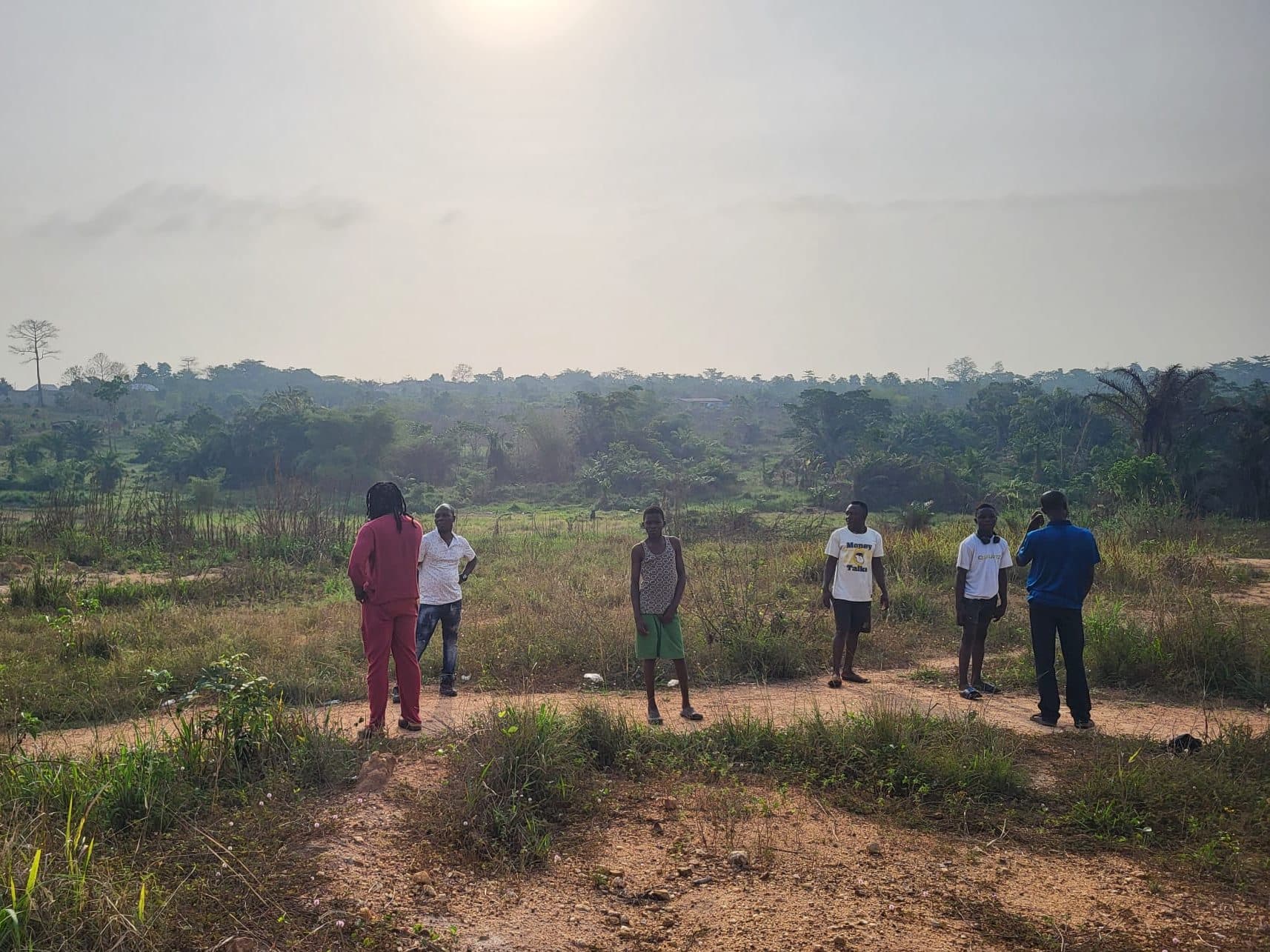
Much of my work centers on collectivity. Or, at least, the notion of it. Collectivity has been at the core of my activism, and it has been a red thread throughout my academic and artistic work, both theoretically and methodologically. I experimented with collaborative research practices, co-creation, and all that community-oriented stuff. Of course, these endeavors never went without trouble. There were many moments of tension, conflict even, over the unequal division (or, execution, rather) of labor. Over authorship and visibility, authority and decision-making, and over the already unequal conditions under which our attempts at such work takes shape in the first place. And yet, I held on to it, because I believed in its radical potential. And I was convinced that the nature of our work would otherwise be an empty gesture, or a pathetic attempt at individualistic careerism. Individualism was what the media, academia, and the non-profit industrial complex demanded. Collective work would bring about a disruption of some sort, no matter how modest.
Collectivity evokes a sense of unity and shared responsibility that prioritizes cooperation over individualism. It is most commonly defined as referring to a group of people acting as one entity, bound by a shared purpose or condition. I am reminded here by the philosophy of Steve Biko, among others, and his insistence on a collective blackness through the Black Consciousness Movement. For him, collectivity was a political strategy and a necessary consolidation in the face of white supremacy. My own attachment to collectivity immediately borrows from that way of thinking. It cannot be detached from my Black identity. In fact, it emerges from it. Collectivity, from my positionality, is a resistance to Western individualism and its persistent celebration of individual authorship, secluded self-making, and self-reliance. To lean into collectivity is to resist that script, and to imagine forms of work and being that do not begin and end with the singular subject. But what if I overestimated its potential?
That thought came up after reading a substack post by someone I have recently started working with on a long-term project. He - the author - is an architect and curator, and works at the crossroads of academic research and artistic practice. Reflecting on his first official curation gig at the 2025 LagosPhoto Festival, and other experiences leading up to the opening of that festival, he writes:
"I have to be [intentional] in claiming my own voice and narrative - not just as a curator but as an author writing a world through my various creative endeavors, particularly in situations where silence (often masquarded as neutrality or masked behind the rhetoric of "collaboration") is expected. Because ideas and concepts are hard to measure, it is easy to devalue them in the face of the more quantifiable outputs in a creative process, even as authorship of those ideas is claimed by those who did not originate them. But it is ideas and concepts that are propagative, shift perceptions, and make revolutions possible."
The author and I both navigate a cultural landscape where collaborative work and collectivity is - ironically - increasingly encouraged and praised. But, as described above, "collaboration," in many of these constellations, becomes a rhetoric that conceals all sorts of asymmetries between those involved in collaborative projects. The author claiming his voice in such contexts can be read as refusal to let original ideas and concepts circulate without proper acknowledgment.
I recognize the urgency in that, and have seen much of my own intellectual labor absorbed into collaborative projects. At the same time, I want to assert that ideas rarely emerge from isolated minds. They take shape through encounters, conversations, observations, and so on. As relational thinkers have long argued: thought is produced in and through interaction. It is social before it is proprietary. The difficulty lies in holding onto that relational understanding of ideas without allowing it to justify the invisibilization of those who articulate them in very specific ways. That has been one of the biggest challenges for researchers, no matter how decolonial, but also for collectives. And even for revolutionaries, since we live in a world in which revolutions are commonly narrated through the figure of a singular — often male — instigator, while the labor of initiators and other crucial figures (oftentimes women) is relegated to the background, structurally overlooked and eventually forgotten.
If we take that relational understanding seriously, we might want to ask when authorship, as a form of "individual agency" (a term that the author quoted earlier brought up in a personal conversation), is radical, and when it becomes complicit. That brings me to a grant scheme I am currently writing a proposal for. In order to get funded, the project has to be built around an international collaboration. Though, the project would take place on land that I personally own, and will be backed by resources and bureaucratic infrastructures that do not necessarily account for how things work — or do not work — in that particular international context. And so, we are on unequal footing from the start. I return to that substack post, where the author writes:
"the more work I produce, and the more I come to understand the conditions any of us in the global south must contend with in cultural spheres, the more certain I become of how essential it is to articulate authorship, if only to avoid reproducing the very power dynamics that have brought us here."
In the context described here, authorship may not be about distinction but about accountability. When cultural production, especially from the global south, is mediated through institutions, particularly those that remain largely western in funding, validation, and circulation, intellectual labor does not move on equal terms. Ideas are appropriated, reframed, sometimes celebrated, while the structural conditions of their emergence remain invisible. It happens all. the. time.
Individual agency, in this sense, is not the assertion of the sovereign individual, but the ability to intervene in how one’s work is positioned within cultural/academic/artistic exchanges. It is also what makes one legible to funding bodies, to institutions, to the evaluative logics of the cultural sector, and, to be fair: the non-profit industrial complex. Yes, authorship both interrupts erasure and feeds the machinery that rewards named individuals. The radicality of claiming it depends less on the act itself than on the context in which it takes place.
So, are we romanticizing collectivity? Well, we might need to stop using “collaborative” and “collective” as if they are interchangeable, because they are not. Collaboration has become both a claim and a requirement in the cultural field. It circulates in these spaces as evidence of openness, horizontality, and ethical awareness. But in reality, it is deeply entangled with the dense network of funding schemes that organize political and artistic work into grant cycles, partnerships, deliverables, and impact metrics. Within that apparatus, collaboration may be encouraged in principle, but only in ways that don't unsettle underlying distributions of power.
Collectivity, however, does not have to mean collaboration in this procedural sense. It does not always require shared authorship, equal tasks, or co-branded outputs, although it can. Collectivity might be more of an orientation in the form of a shared analysis of the system, a commitment to mutual accountability, and a refusal to naturalize the "white supremacist capitalist patriarchy" even as we navigate it. It can function less as a project format and more as a strategy, or, like Biko envisioned, a way of aligning ourselves in struggle.
The way things are currently organized may require a kind of collective navigation of the system in pursuit of individual sustainability. By that I do not mean that we all aspire to unapologetic careerism using collectivity only as a fancy facade. Rather, we, the people, are aware of the systemic constraints, including funding criteria, institutional hierarchies, geopolitical inequalities, and we learn how to work around them. We strategize together, we share information, we support one another’s applications and visibility. It is a collective scheming of sorts. A scheming of schemes, but one that results in outputs credited individually and collectively. And no, power does not disappear in this arrangement, but it is managed, negotiated, and, yes, sometimes quietly reproduced.