A colonial manifesto by David Van Reybrouck (spoiler: bro is butthurt)
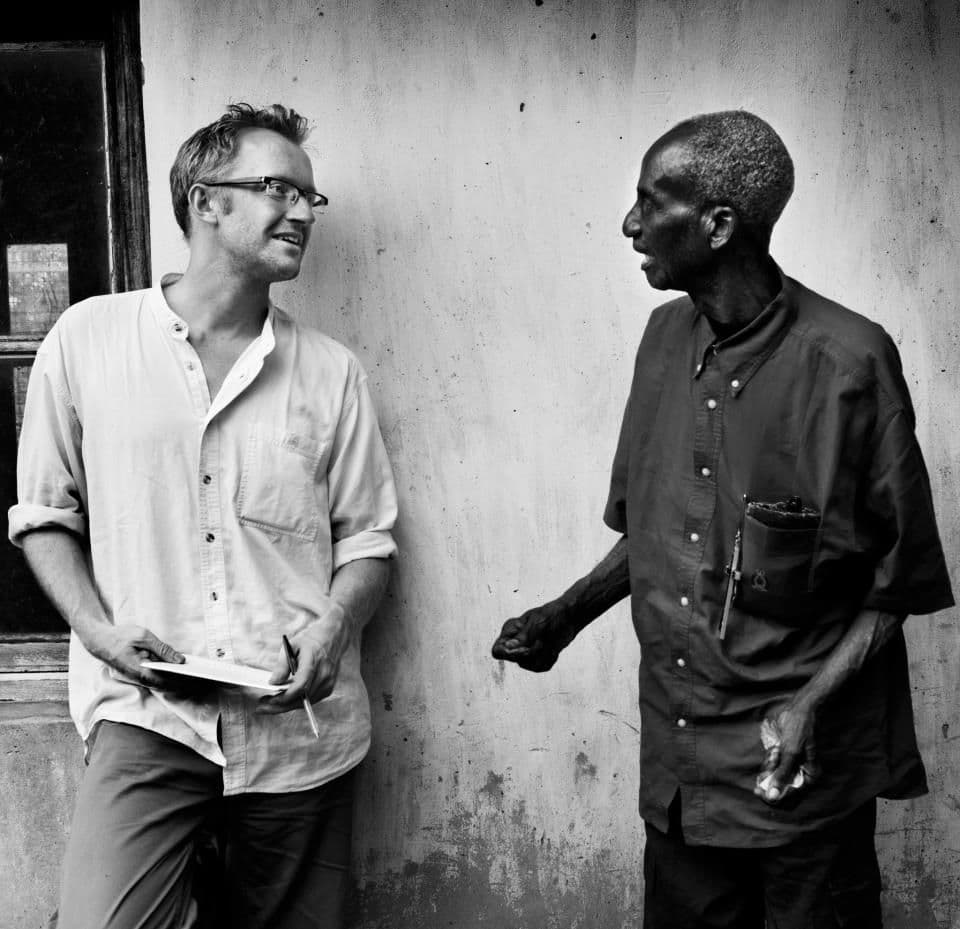
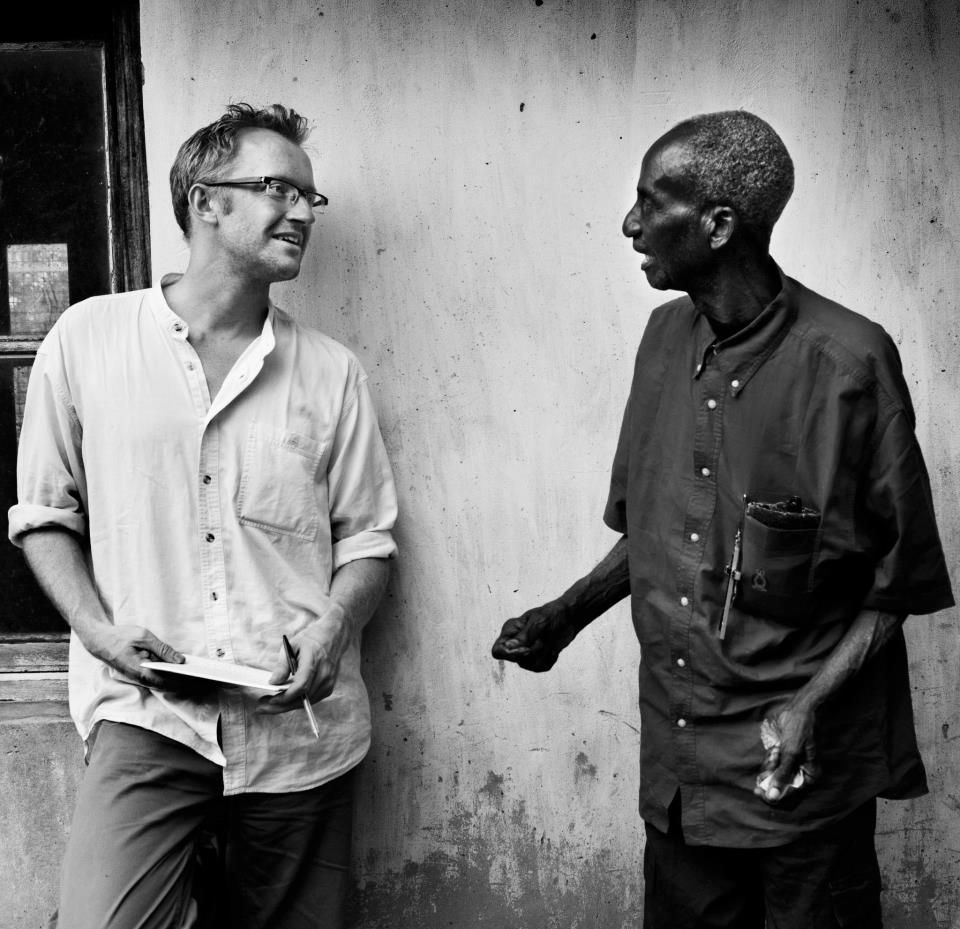
[caption id="attachment_93" align="aligncenter" width="960"] David Van Reybrouck on the left. Photo by Stephan Vanfleteren.[/caption] In June, the AfricaMuseum (formerly the Royal Museum of Central Africa) hosted a conference in Brussels titled “Sharing Past and Future: Strengthening African-European Connections.” Organized in collaboration with the Egmont Royal Institute for International Relations and other Belgian institutions, the conference was by invitation only. The official explanation was “limited capacity.” Unofficially, it was “to avoid rebellion and preserve a peaceful climate,” as a colleague of mine was told. Whatever the justification, the result was a gathering that was hardly representative of the diasporic communities most affected by colonial legacies. The auditorium was filled mainly with older white Belgians. David Van Reybrouck, best known for Congo: The Epic History of a People, was granted the privilege of setting the tone for the conference with a keynote. His keynote outlined what he called a “roadmap” for rethinking African-European connections, framed around four calls to “zoom out”:
From national frames of reference
From past/present binaries
From Western essentialism
From anger
What followed, however, was not a roadmap to decolonial futures but a thinly veiled colonial manifesto. One that discredited activist intellectuals, trivialized racism, and positioned Van Reybrouck as the reasonable center of the debate. Let's revisit.
1. “Zooming out of the national frame”
Van Reybrouck urged scholars to transcend nation-states and adopt a transnational lens on colonialism. While this may sound progressive, it is questionable (deeply problematic, actually) in a context known for its selective amnesia about its colonial past. Compared to neighbouring countries, Belgium's public debate remains weak and nostalgic narratives of the Congo have long persisted. Moreover, Congolese, Rwandan, and Burundian diasporas* have long been marginalized in Belgian politics, culture, and academia. Grassroots initiatives such as Pitcho Womba Konga’s Congolisation have worked to place Congo at the center of Belgian memory. Yet these efforts are routinely co-opted by institutions like Bozar, which turned the Congolisation festival into the “Afropolitan Festival,” stripping Lumumba from the conversation and generalizing European colonialism to obscure Belgium’s specific responsibilities. By calling to “zoom out” to a European frame, Van Reybrouck effectively reproduces this displacement. Colonial critique must begin within the nation-state that directly benefited from exploitation. Belgium’s colonial project was driven by national prestige; Belgium’s colonial afterlives are experienced in national policy and society. To leap prematurely to the “transnational” is to evade national accountability.
2. “Zooming out of binary schemes”
Van Reybrouck warned against eurocentric binaries, but his critique quickly turned into an attack on “activist intellectuals.” He accused them of internalizing colonial discourses, of victimizing Africans and silencing white voices. He claimed identity politics was radicalizing debate and needed to be curtailed. This rhetoric is not about philosophy but about power. Representation is about who gets to speak, and Van Reybrouck’s discomfort stems from the fact that diasporic and activist scholars increasingly challenge his own monopoly on Congo expertise. His selective invocation of concepts like Ubuntu and “oppositional dualism” is opportunistic. Stripped of their philosophical contexts, such terms become weapons to delegitimize antiracist and anticolonial voices and re-center himself as a “moderate.”
3. “Zooming out of Western essentialism”
Here Van Reybrouck placed European colonialism alongside Greek, Arab, and Chinese expansions, asking whether Western imperialism was really unique and whether racism was a mere byproduct of expansion or perhaps “natural” and universal. This is where his framework collapses entirely. Racism, as numerous scholars have shown, is not "natural" and universal, but a modern construct born of Europe’s colonial encounter. Colonialism forged racial categories that continue to shape law, policy, and everyday life across the globe. To suggest otherwise is to erase centuries of scholarship and to reduce Europe's ongoing (neo)colonial project to just another episode in a timeless cycle of conquests.
4. “Zooming out of anger”
Van Reybrouck’s final point was the most revealing. He claimed that post-colonial debates have become too emotional, that anger is unhelpful, and that activists risk “burning bridges.” Laughter rippled through the mostly white audience. But here Van Reybrouck slipped fully into the very “binary” he earlier denounced. Anger was equated with aggression, irrationality, and excess emotion. It's the classic colonial trope used to delegitimize voices of color. To dismiss anger in anti-racist and decolonial struggle is to strip marginalized communities of one of their most vital political resources. As Audre Lorde reminds us: anger is a response to injustice, not a barrier to dialogue. What makes Van Reybrouck’s keynote so troubling is not only the weakness of his analysis, but the authority he was granted to define the terms of debate at a conference allegedly dedicated to “strengthening African-European connections.” In reality, Van Reybrouck’s speech was less a roadmap than a manifesto to preserve his own place at the center of the field, against the very people whose struggles make "post-colonial" debate possible. His days as the unchallenged “expert on Congo” are numbered. But as long as institutions keep elevating voices like his, coloniality will remain intact, disguised as dialogue.