Ugh, white rastas.
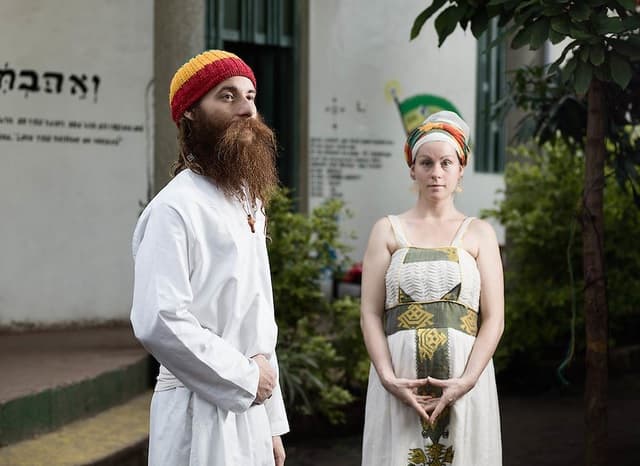
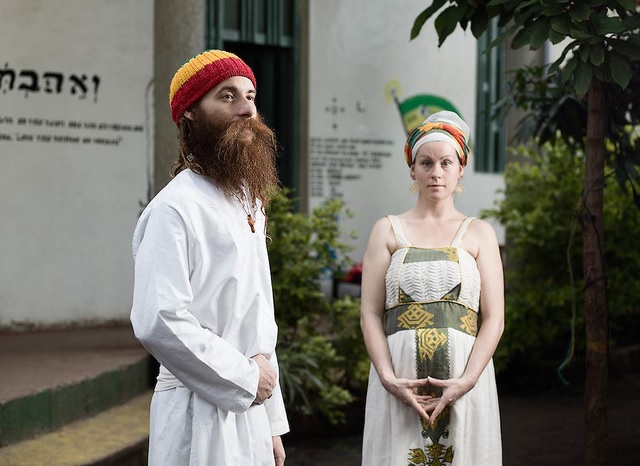
[caption id="attachment_129" align="alignnone" width="640"] Ras John Judah and his wife Sista Ellen, inhabitants of Shashamane, Ethiopia - a district that Haile Selassie I donated to Africans in Diaspora seeking to repatriate.[/caption]
My recent reading of Kirk Zwangobani’s From Diaspora to Multiculture: in Search of a Youthful Pan-African Identity brought me back to my teenage years, when the teachings of Rastafari felt like revelation. Reflecting on his teenage years in 1990s Australia, Zwangobani, describes how Rastafari gave him a way to navigate a predominately white environment as a Black person. He writes:
"Rastafarianism for a politically minded black youth in the West like me in the 1990s provided a means to understand legacies of colonialism and a means with which to fight back against the oppressions of ‘race’. Retaining links to Africa, ‘our father’s land,’ was a clear message central to this struggle."
Like him, I discovered Rastafari as a politicized Black language of survival: a refusal of Babylon, a restoration of dignity, a call to return to Africa, whether physically or symbolically.
What I hadn’t thought much about at the time was the presence of white people who identify with the Rastafari movement. Many of them encountered Rastafari through the popularization of reggae, some through friendships or travel. Others frame themselves as students of a Black Radical Tradition, stressing humility and solidarity, and, then, of course, there are those who cherry-pick Selassie’s speeches and reference his call for unity "beyond color" to justify their presence in the movement. Among them are people genuinely working against colonial hierarchies, as well as people who slip quickly into a self-centered and colorblind rhetoric.
My relative indifference towards white Rastas shifted when I stumbled on a webpage dedicated to white Rastas claiming that Black Rastas see them as "special" and that Black people's refusal of brotherhood with white Rastas betrays the “true” One Love. Unlike white Rastas, Black Rastas don’t fully understand Selassie’s vision of unity.
At first glance, I thought it wasn't worth engaging with this kind of white self-justification. The writers aren’t interested in connecting with the (Black) roots of the Rastafari movement at all. Instead, they’re reassuring each other in the comments of how unique and spiritually elevated they are. One person uses the claim that white people helped free enslaved Africans (as though they didn't enslave them in the first place) and therefore are entitled to join the Rastafari movement. Such politically tone-deaf reasoning shows how whiteness works psychologically when it wants into a space built against it. It turns itself into the special ingredient, the exceptional presence, the holder of "true overstanding," while dismissing any Black critique as ignorance or even hate.
Whiteness tends to be recast as an asset, or a passport to universality. And when Black Rastas set boundaries, they’re accused of hypocrisy. Or, in the words of a white member of this Rasta forum: "Is this not what I&I’s ancestors did to you?"
It's the reverse uno card, in this case "reverse racism", or "anti-white racism" even, right in your face. The very use of "I&I" here collapses oppressor and oppressed into the same "we", erasing history to produce a colorblind brother- or sisterhood.
Finally, a Black person responded and broke it down:
"This is reverse psychology. The mentality [of white Rastas] is: everyone loves me, why can’t you? That is hard for them to give up. As much as I overstand what Rastafari means, I also know to guard against the arrogance white people have shown over and over again. It’s so easy for you to say One Love, and then blame us for going against His Majesty if we see color."
This isn’t a petty rant about how white people are not supposed to wear dreadlocks. It’s about how whiteness infiltrates movements founded against it. How a teaching that liberated me as a Black person in Babylon becomes appealing to the very group that embodies Babylon. And how whiteness so reliably recenters itself as the holder of ultimate spiritual overstanding.
The same dynamics show up in the global arena of pop culture, which has embraced reggae music since the 70s. Reggae festivals across Europe, reggae platforms like World A Reggae, and even many reggae musicians’ careers are bankrolled, organized, and mediated by white folks. These festivals almost always cater to white audiences. Meanwhile, few of those same artists perform in Africa, the land they sing about so relentlessly. Whiteness isn’t incidental to the reggae industry. It is its infrastructure.
And the same logic extends beyond reggae fans to those who claim to seek a deeper Rasta livity. I once met a white Rasta woman in Ghana. She proudly explained that she had “made it back to the Motherland,” unlike her Black Rasta friends in Europe. She credited her discipline and Jah’s will. What she didn’t mention – until I insisted – was the capital, family wealth, and privilege that made her "repatriation" (read: migration) possible. Rather than seeing her position as shaped by whiteness, she framed it as evidence of Black people "not working hard enough."
In 1948, Haile Selassie granted land at Shashamane to members of the Ethiopian World Federation as a gesture of restitution, specifically for Africans in the diaspora whose ancestors were "stolen from Africa." The land was meant as a foothold for return. Today, the community numbers in the low thousands, though many who tried to settle faced bureaucracy, local resistance, or economic hardship. And yet, photographs and reportage document white Rastas living there. For instance, Ras John Judah and his wife Sista Ellen have been profiled by photographers in Shashamane. Their presence is not necessarily malicious (it’s, at least, very fucking hideous) but history matters. And so I have to ask: white people, what is it in Rastafari that appeals to you so much? Why do you feel entitled to make it yours?